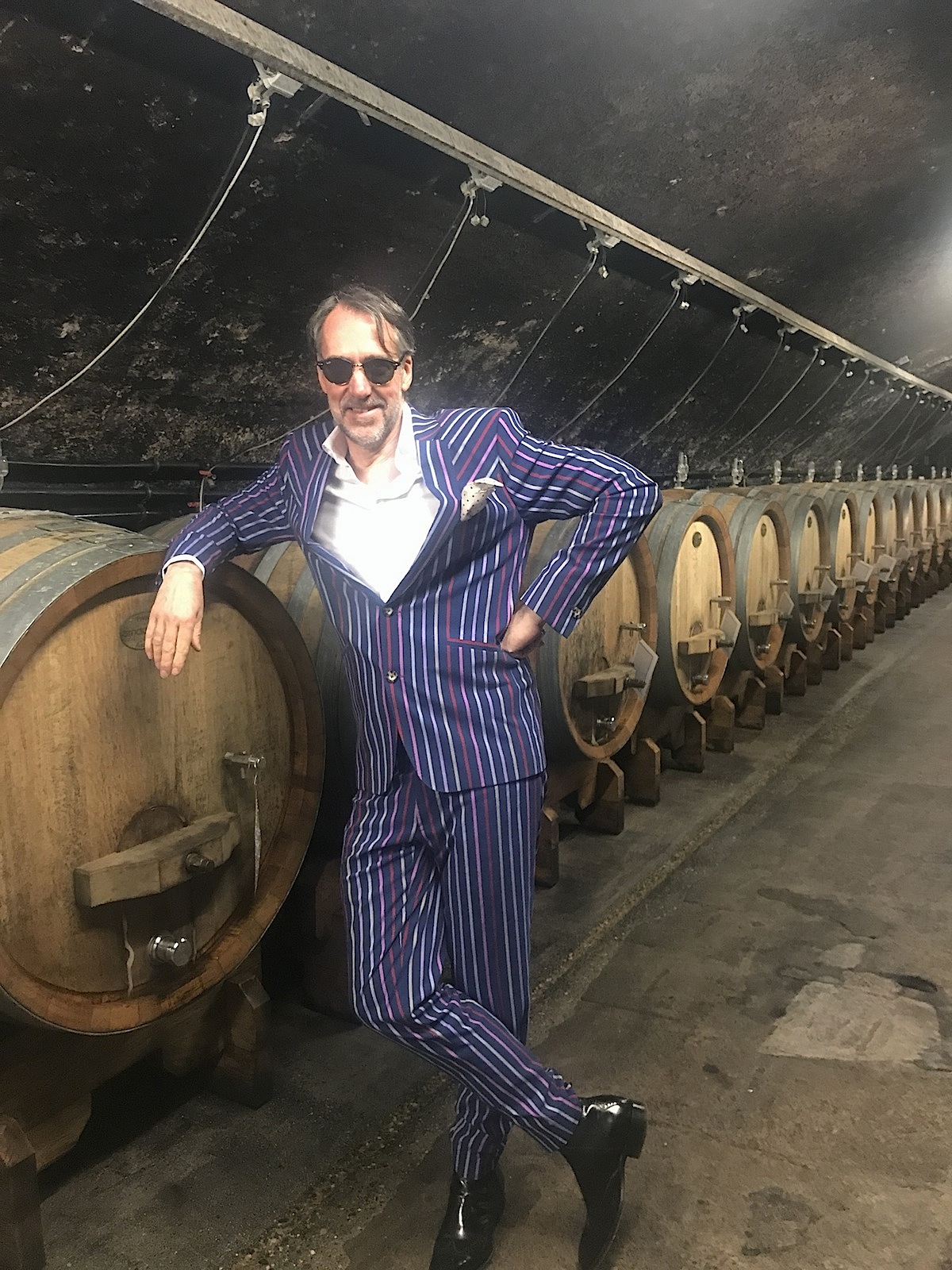
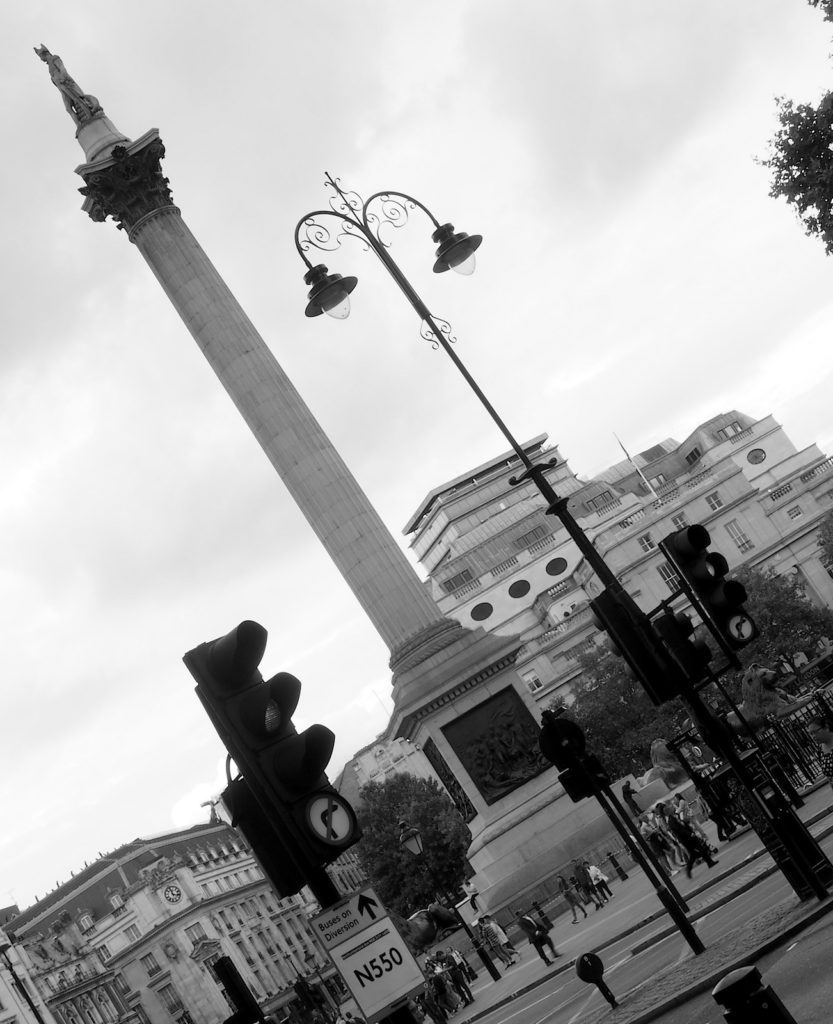
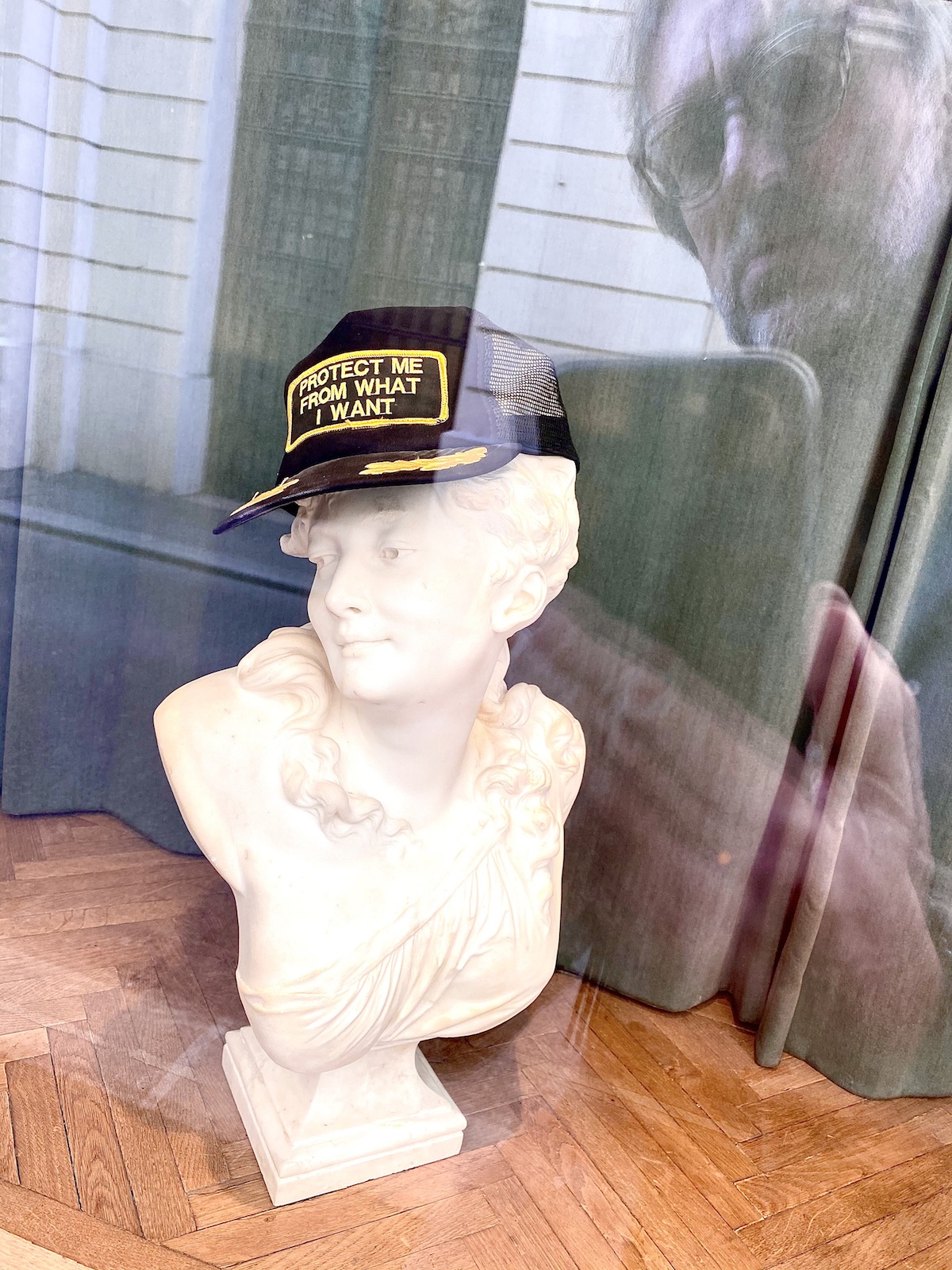
Some strange noises – at first barely audible and impossible to identify – came from behind the heavy curtains. For some time I was frozen to the spot, unsure not only what to do, but if I should do anything. But the noises got louder and suddenly there was no alternative, but to yank back the curtain and see what was behind it.
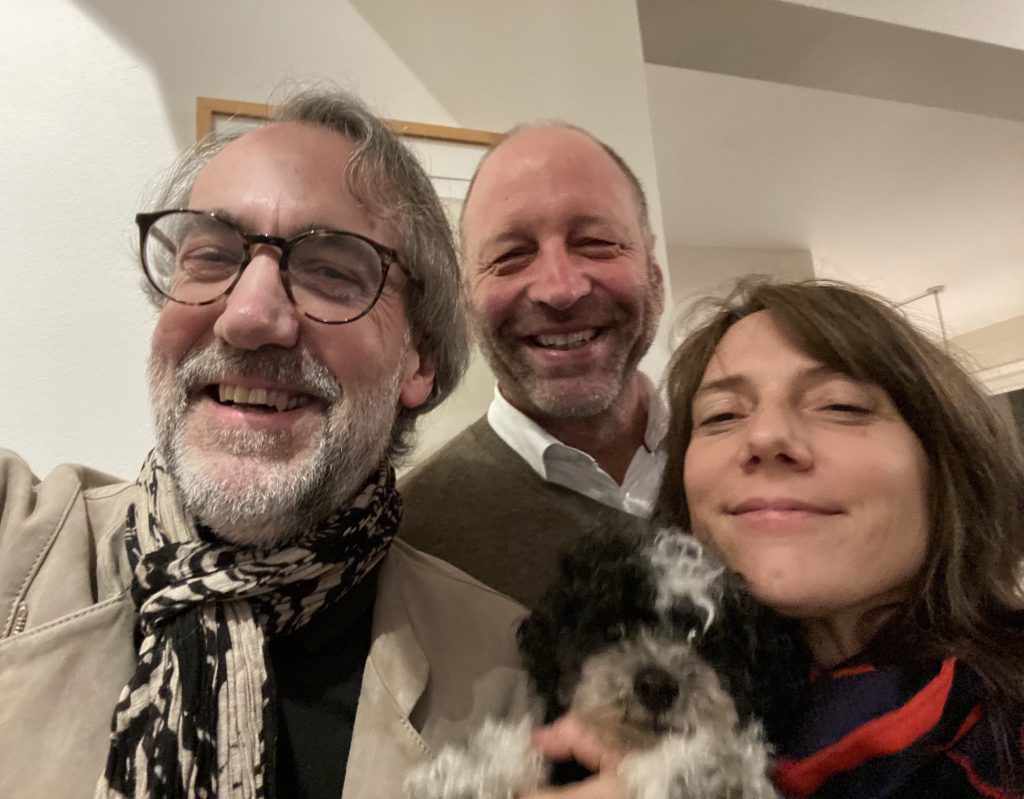
Just over three years ago I started writing the script of a thriller called Hauenstein. Now that the Berlin-based film producer Alexander van Dülmen and film director Ziska Riemann are my partners in this venture, and together we are working to realize Hauenstein as a 6 episode streaming series, so this project demands to be properly presented. Apart from everything else, it means that I am now „officially“ a scriptwriter / screenwriter as well as a journalist. With that this blog, that long neglected because of the pressure of work, begins to take a decisive new direction.
No doubt, this will come as a surprise to those people who have followed my journalistic work, some of them for many years, or even decades. However, this new project has deep roots. It was the combination of my 60th birthday and the Covid-19 crisis that pushed me to start scriptwriting, but the figure of Hauenstein goes back more than a quarter of a century. More about his origins will follow. My first attempt to write his story in early 2001 was an abject failure, because back then I lacked any of the skills necessary to write a film or TV script.
I began acquiring that knowledge after I moved from Berlin to New York City at the end of 2012, although it took all four of my NYC years to get a firm grip on the basic principals of storytelling. I was surprised to find that a great many of the books and films I loved complied with those principals, even when the authors were unfamiliar with them.
I have a lot of sympathy with those scriptwriters and authors who find the idea that there are „rules“ for what they do intimidating or constricting. But, rules are there not only to be followed, but also broken and twisted. For example, as the Nouvelle Vague film director Jean-Luc Goddard famously said, „A story should have beginning, a middle and an end, but not necessarily in that order.“ He made that work very well in his films, which confirms that he knew exactly what he was talking about.
I prefer the beginning, the middle and in the end in that order, because I think „one thing leads to another“ is how most of us experience life most of the time. I found the discovery that there is a logic to storytelling empowering, rather than limiting or inhibiting. However, I must point out how this wonderful revelation was allied to the painful realization that most of what I had written before was fundamentally flawed. The best case scenario for my writing pre-2012 was that I got lucky and a good instinct enabled me to tell a journalistic story in a way that made it more or less compelling. But those were rare exceptions to the rule. Mostly, my stories relating to wine were fuzzy at the beginning and in the middle, then they fizzled at the end.
I think it’s not going too far to say that coming to a basic understanding of story structure and dynamics was a new beginning for me. This new story of Stuart Pigott the scriptwriter has now reached the middle section, and its turning point is quite possibly approaching. Getting to know Alexander van Dülmen was a decisive moment, after which I had no doubt that one way or another Hauenstein, and the other stories I am developing, would come to fruition.
I will be writing more about all of this here during the coming weeks and months, not just reporting on the progress the Alexander van Dülmen, Ziska Riemann and I make with the Hauenstein project. I will also delve into the background of my – love it or hate it – extraordinary story. Although it is very much part of our Zeitgeist, it has ancient roots. That might seem like a far-reaching claim to make, but let me show you why I think it is entirely realistic. I will also describe how my lifelong obsession with film caused me to give the story of Hauenstein its totally distinctive form. Watch this space!
PS I am not abandoning wine journalism, www.JamesSuckling.com, FINE magazine or the other publications and platforms where my journalistic work appears. Please don’t believe anyone who tells you that I am! It is a very German myth that each person is, and can only be, one thing.
Posted inHome|Comments Off on Introducing Hauenstein, Scriptwriter Stuart Pigott
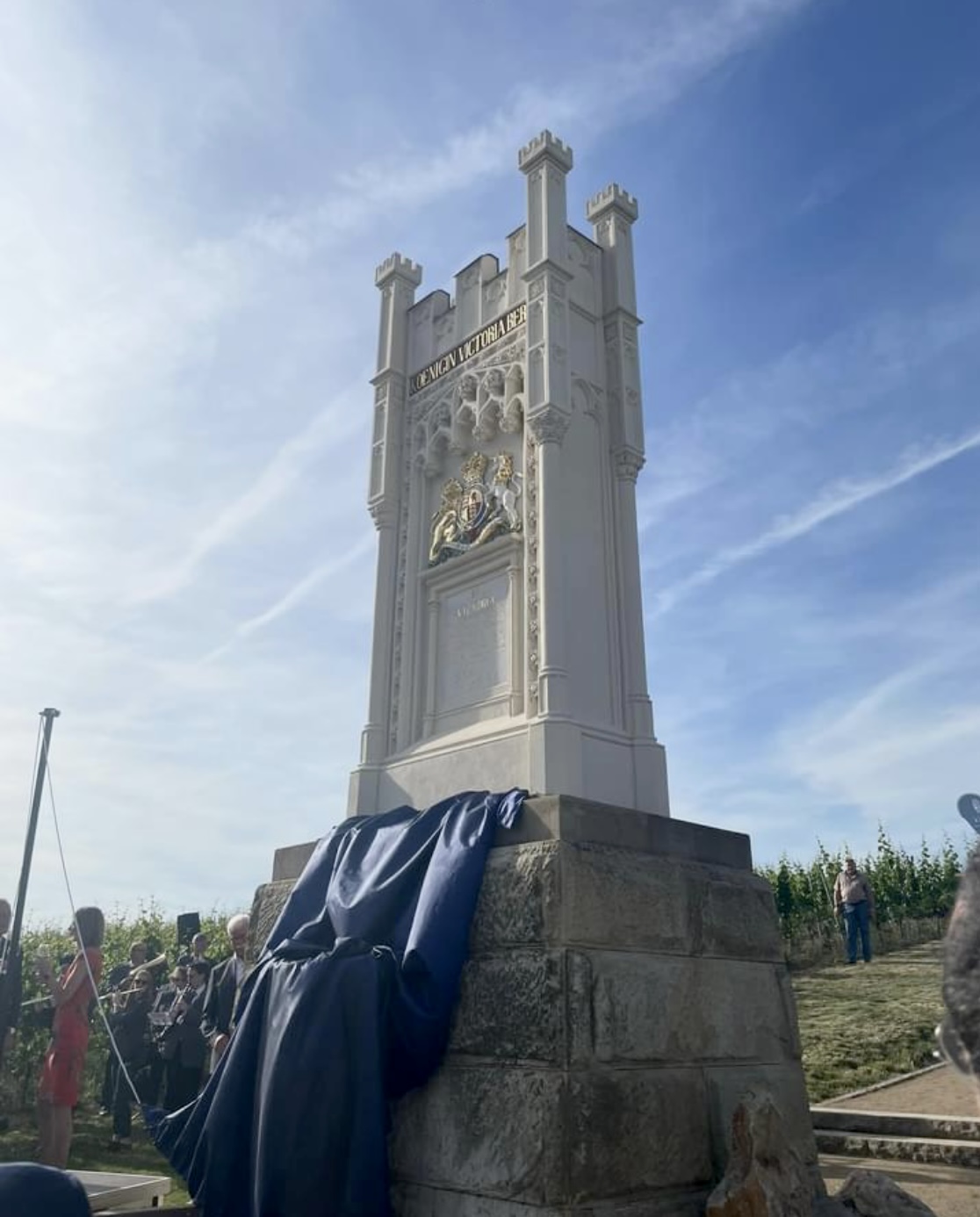
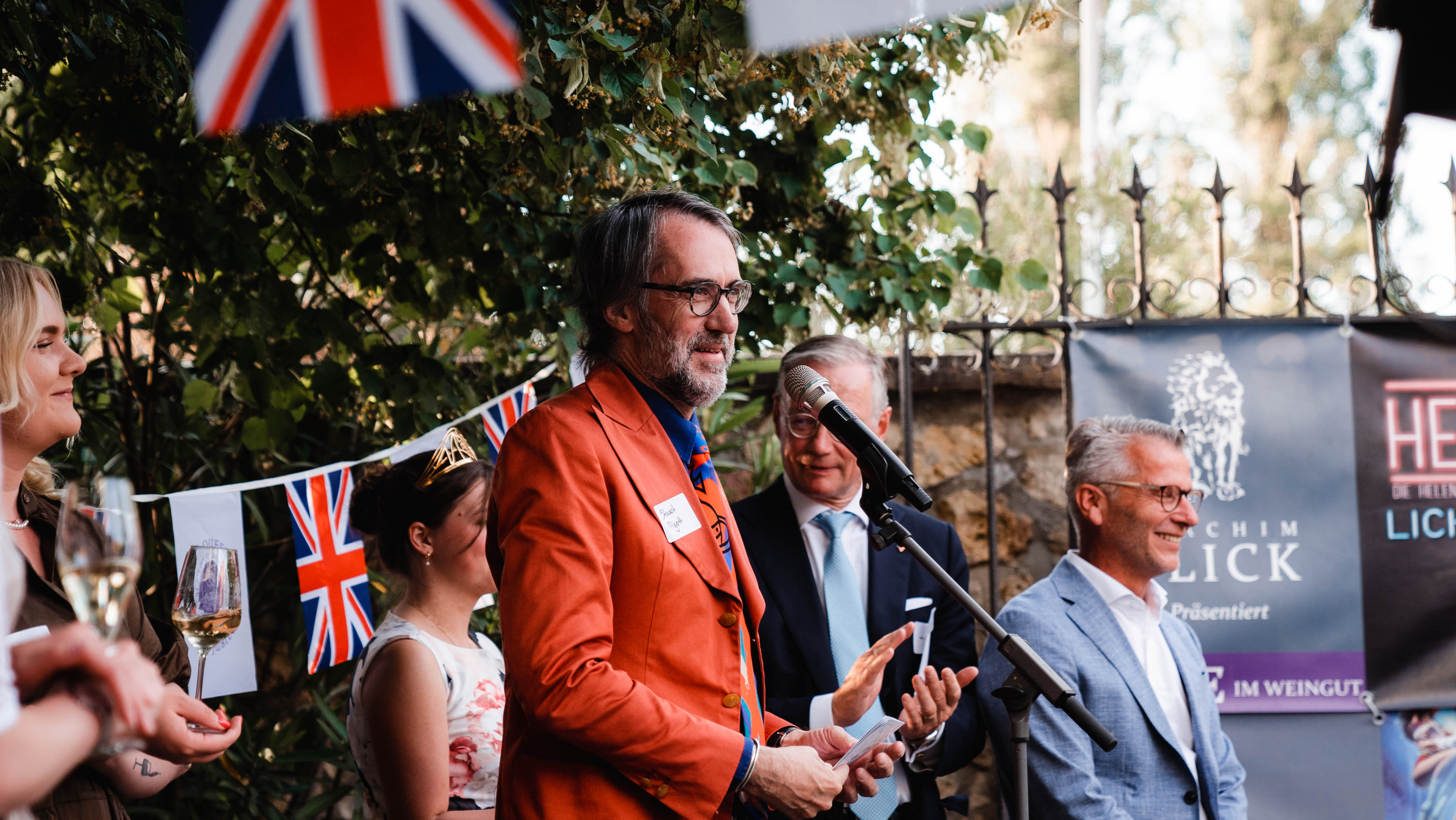
There were a number of requests for me to publish the text of my speech at Weingut Flick in Wicker/Rheingau on the occasion of the unveiling of the restored Königin-Victoriaberg monument by Jill Gallard, the British Ambassador to Germany. I have added a few details to make it easier for those who did not attend on Tuesday, 14th June to follow. Firstly, the monument was erected in 1854 by the vineyard’s then owner Georg Michael Papstmann to commemorate the visit of Queen Victoria and her consort Prince Albert to this spot for a pick-nick on the 15th August 1845. The vineyard is owned by the Hupfeld family, but is on long-term lease to Reiner Flick of Weingut Flick, who’s Königin Victoriaberg Rieslings are highly recommended.
I studied cultural history at the Royal College
of Art (RCA) from 1984-86 and one of the things I learnt from my Professor,
Christopher Frayling, is that the best way to understand a historical event or
person is to look at them from as many different angles as possible. Today I’d
like to look at Queen Victoria and Prince Albert’s visit to the vineyards of
Hochheim in the Rheingau region back in 1845 from two perspectives and to see
how they connect with one another.
First of all, who was Queen Victoria? The schoolchild’s answer is that she was queen of England for the great majority of the 19th century (1837-1901) is correct, but superficial. In fact, she was the 6th British monarch from the House of Hannover. George I was the first (from 1714-1727) of them and he was not popular, because he only spoke German. Queen Victoria’s great popularity is quite a contrast to that! However, her connection to Germany goes much further than this, starting with the fact that her mother was Victoria, Princess of Saxe, Coburg and Saalfeld. This is, of course, where her first name came from.
In 1840 she married Albert, Prince of Saxe, Coburg and Gotha and they had 9 children together. The eldest of these was Victoria, Princess Royal, who married Frederick, Prince of Prussia in 1858. 30 years later he became the German Kaiser Frederick III and King of Prussia, but he died only 99 days later. He was succeeded by their eldest son Wilhelm II, often referred to as Kaiser Bill, the last German Kaiser.
Wilhelm II was present at the bedside of his
grandmother Queen Victoria when she died on the 22nd January, 1901
sitting next to her eldest son and successor King Edward VII. His full name was
Albert Edward of Saxe, Coburg and Gotha. This remained the family name until in
1917, when, during World War I King George V changed the family name to Windsor
by Royal Proclamation. So you see, the connections between the British Royal
Family and Germany go very deep.
Today we celebrate how the trade in German wine is a historic and contemporary link between the peoples of Britain and Germany. The word Hock for German Rhine wines, which clearly derives from the name Hochhiem, stands for this. It goes back much further than 1845, so let us have a quick look at the history of Hock.
The first recorded exports of wine from the German Rhine to Britain date back to the 10th century, that means well before the Norman conquest of England in 1066. The route of transport for wine then was down the Rhine via Cologne (Köln), which was a great trading hub. From here all manner of goods were exported to Britian, the Netherlands, Scandinavia and the Baltic. Already in 1162 the Rheingau Cistercian monastery of Kloster Eberbach (still the largest wine estate in Germany!) established a wine cellar there. At Winkel/Rheingau you can see one of the ancient cranes used to load wine barrels on to riverboats. In 1380 fully 12 million litres of wine were exported from Cologne, a good part of it to Britain, but at this time the English name for these wines was Rhenisch and there is no record of Hock.
Big changes were coming though and the centre of the Rhine wine export trade gradually switched from Cologne to Frankfurt after 1500. The first mention of Hock comes in Thomas D’Unfrey’s play Madame Fickle in 1675, and we can assume that his audience knew what the actors were talking about. That suggests the term may well have replaced Rhenisch during the Restoration period from 1660, much else having also changed then but I am speculating. It then referred not only to the wines of Hochheim, but to wines from the entire Rheingau. Later its use was expanded to wines from the German Rhine.
All of this happened long before the arrival on
the scene of the Riesling grape, today the most widely planted grape variety in
Germany and the wine most widely associated with Germany. The most significant
date for German Riesling is the replanting of Schloss Johannisberg’s vineyards
with 293,000 Riesling vines in 1720-21. It was probably the first ever
mono-varietal vineyard in the world, regardless of grape variety!
A number of innovations followed this, including
the discovery of the advantage of late-harvesting, or Spätlese, for wine quality at Schloss Johannisberg in 1775. However,
the big breakthrough for the Riesling wines of the Rheingau and Germany came
with the great 1811 vintage. At this time all wines needed at least 3 years in
barrel to clarify and stabilize before they could be bottled or sold. This
means that the 1811s came onto the market right after the end of the Napoleonic
Wars in , when travel and the movement of goods became much easier; perfect
timing! These wines soon had the advantage of a celebrity endorsement in the
form of Goethe’s West-östliche Divan published
in 1819. Several poems in this collection sing the praises of der Eilfer, as Goethe referred to the
wines of the 1811, or comet vintage.
After Prince Albert married Queen Victoria in
1840 many German things became fashionable in Britain. For example, he was not
responsible for putting up the first Christmas tree in Britain, although the
Royal Family certainly has that honour. However, he certainly popularized
putting a brightly decorated fir tree indoors during the Christmas season,
making it an essential part of the British Christmas. Also, right through the
reign of Queen Victoria the status and prices of German wines continued to
climb.
So, you see, there were many reasons why the couple
made time to come here to see the place where the name Hock originated and to celebrate how these wines linked the peoples
of Britain and Germany for many centuries. You could say that their visit placed
a crown on that long relationship which continues to this day.
Today is my 61st birthday and anniversaries are useful moments to look back. Recently I’ve been thinking a lot about the 1921 vintage for German wines, which is celebrating its centenary. It was not only a great vintage, but was the turning point for the nation’s wine industry in the direction of modern winemaking methods.
I searched and searched for information that went beyond general observations and was free of platitudes. Finally, I found something in the book Könige des Rieslings an Mosel, Saar and Ruwer, or Kings of Riesling from the Mose, Saar and Ruwerby Peter Sauerwald & Edgar Wenzel (1978, Seewald Verlag, Stuttgart) about the 1921 vintage at the Kathäuserhof estate in the Ruwer (now part of the Mosel wine region). My guess is that the first text below was written by Hans Wilhelm Rautenstrauch, the then owner of the estate, in August 1921:
“There was just one rainy day each month in May and June, apart from that burning heat. In July the heat and drought intensified. Occasional thunderstorms didn’t bring the hoped for cooling or the necessary moisture. Thursday, 28th July was the hottest day of the year, bringing enormous heat: 39° C in the shade and 50° C in the sun. At 10pm in the evening the thermometer still stood at 32° C. However, the vineyards look good and we expect a very good crop…”
That sounds rather reminiscent of the 2018 vintage in Germany. However, the Average Growing Season Temperature for 1921 in Geisenheim/Rheingau (sorry, but I don’t have historic figures for the Mosel) was 16°C and for 2018 it was 17.8°C! The books authors also give a rather detailed description of the 1921 wines from Karthäuserhof. Please note that a Mosel Fuder barrel contains 1,000 liters of wine, so the crop was about 120,000 bottles:
“The 1921 crop was 85 Fuder and the wines were bottled around 1925-27. Four of these Fuders from the 1921 vintage survived World War II in bottle. In contrast, the other 81 Fuders were more or less full-fermented out to dryness and those wines were therefore passé after 15 to 20 years of age. In contrast, the four top Fuders of Auslese had between 35 and 76 grams per liter sweetness. Only for this reason do they survive in great shape to this day…”
Today, 76 grams per liter sweetness in a Riesling Auslese would be considered low! The authors go on to give their tasting note for the 1921 Karthäuserhofberg Kronenberg feinste Auslese, the best Fuder of the vintage at the estate. Not only do modern wine critics write florid notes!:
“In spite of the great vintage this 1921 Karthäuserhofberg is a total Ruwer original. The deep colour speaks of its age and shimmers red-sapphire like a sunrise. It smells of an entire bouquet of flowers, also of pineapple and strawberry. The body is full, but not fat, the sweetness noble, the acidity mild, yet still piquant. Its temperament is harmonious, but still far removed from flatness or tiredness. A regal wine from which parting is painful, since one will probably never meet it again.”
Posted inHome|Comments Off on Happy 100th Birthday to the 1921 vintage in Germany!
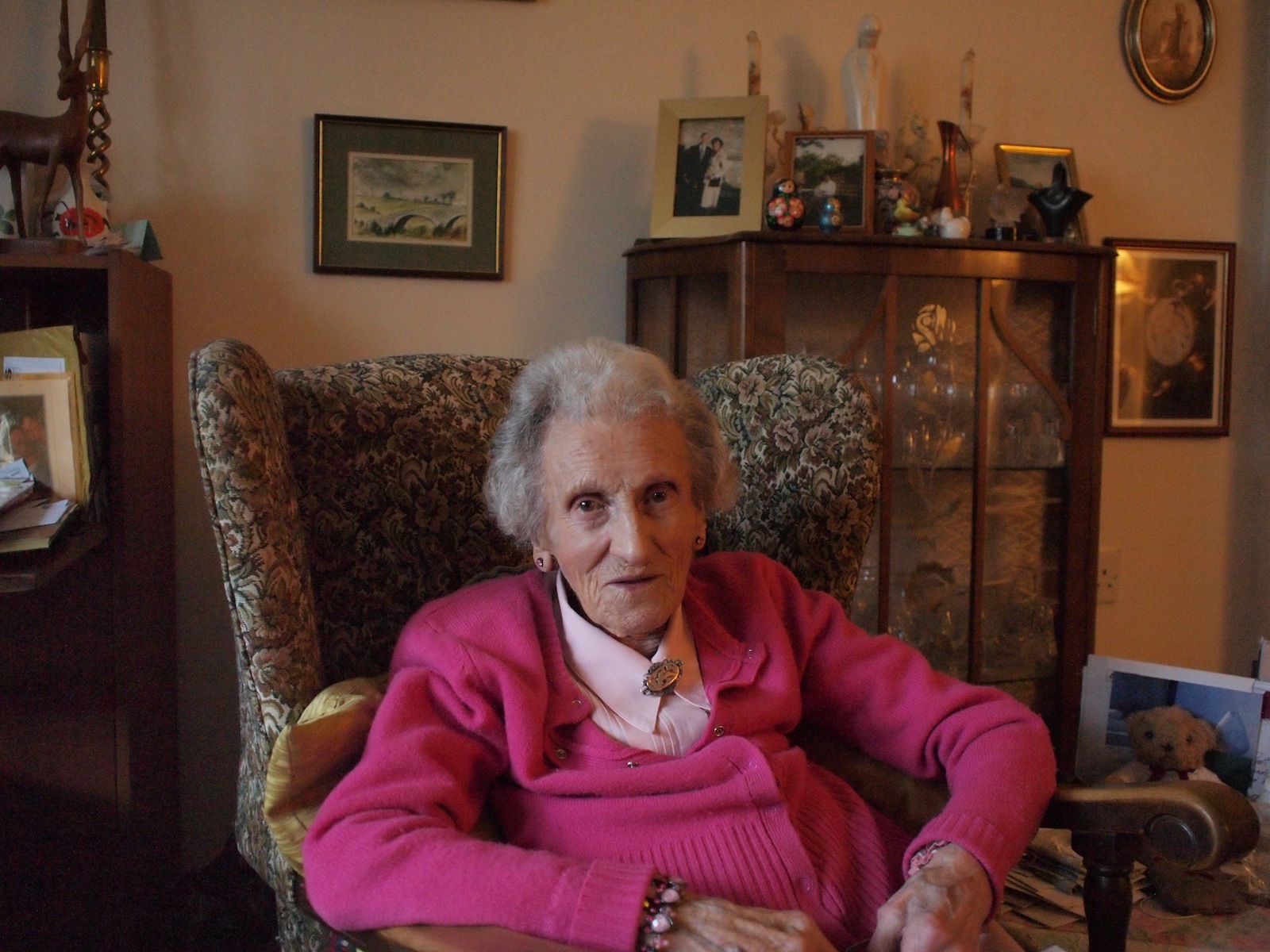
This is my maternal grandmother Annie Pratt who
died ten years ago today on her 101st birthday, and this is one of
the last photograph I took of her just a couple of months earlier. She’s
sitting in her favourite chair in the house where she lived alone until one
week before her death and is surrounded by all her things. For a bit more than the
last decade of her life she lived in the small country town of Lenham in Kent/England
and after I took this photo we walked into the historic centre of town together.
The town fitted her perfectly, because it combined many modern conveniences
with the appearance of timelessness. She loved the antique stores and if tea had
not needed to be made at some point, then she would have spent all day in them
lovingly examining old things great and small. That might seem like a detail,
but I think not. Although she often had strong opinions I find it hard to
imagine a more peaceful person than her.
The truth is thought, that she lived through most of the turbulence of the 20th century. On the 21st of June 1919, aged 9, she witnessed the scuttling of the German fleet at Scapa Flow in the Orkney Islands/Scotland, where her father was a customs officer. In 1928, aged 18, she came 6th in the national Civil Service examinations, and went to London alone to join the Civil Service. All this made a deep impression upon her and she often recounted these stories. In 1939, when she was 29 years old, the outbreak of the Second World War brought the worst period of chaos and destruction in her life. By then she was married to Neville Pratt and lived with him and their two children, my mother Sheila and my uncle Derek (later a famous watch maker), in the green London suburb of Petts Wood. One advertisement for houses like theirs in Petts Wood described them as “bijou baronial residences”, and this too fitted my grandmother perfectly. The family survived the war unscathed and the family business, Pratt’s Stores in the London district of Pimlico, was rebuilt. Pemberton’s Stores in the film Passport to Pimlico (1949, Ealing Studios) gives quite a good idea of what it was like, although Neville was nothing like the way Stanley Holloway portrayed Arthur Pemberton. Rationing in Britain continued until 1955 and this meant some suffering for my grandmother as she struggled to bring up her children. Throughout her adult life her health also frequently troubled her and she talked a great deal about that, often repetitively. In spite of all these things she was a contagiously happy person and I’m sure it was this that first attracted me to her as a very small child.
After Neville sold Pratt’s stores and retired in 1968, he and Annie moved to the small country town of Chulmleigh in Devon/England, the county of her birth. It might sound completely ridiculous, but for me their sprawling bungalow became an image of eternity. The kitchen was the centre of this seemingly unchanging world and the warmth from the old-fashioned Aga stove was the physical parallel of my grandmother’s love. For many years nothing gave me greater pleasure than to sit and talk with my grandmother at the kitchen table. When I was a struggling art student she and Neville supported me in many ways and when I graduated from the Royal College of Art/London in July 1986 she felt vindicated. The truth is I squeaked through, but that didn’t interest her one jot. I could put letters after my name and she was a terrible snob who attached great importance to titles. Of course, Royal was the most significant aspect of “MA Royal College of Art” for her. It took me a long time to share her enthusiasm for royalty, but the political upheavals in the UK since her death have proven how in troubled times they do offer stability, regardless of their failings. I now admit she was right not only about that, but about almost everything except the Channel Tunnel. She vehemently opposed it, clinging to her belief in a mythical England that was green and pleasant and where Jesus undoubtedly walked in ancient time. However laughable that may seem now, I was a beneficiary of her loving nature that was rooted in those beliefs. And I still feel her love for me just as I did when she was alive.
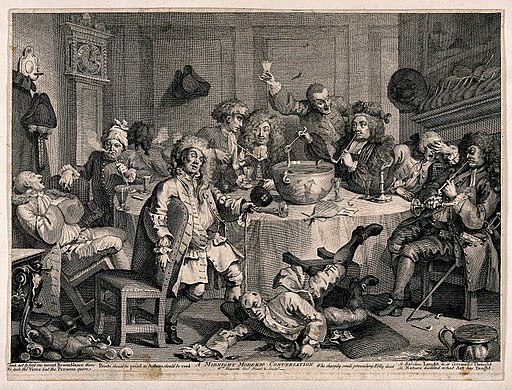
Note: Of course, England has long been many things other than a green and pleasant land. In order to avoid one-sidedness, idealization and nostalgia I end this posting with an image from one of the nation’s greatest satirists, William Hogarth. My grandmother would have greatly disapproved of everything this 18th century English image depicts!
Posted inHome|Comments Off on In Loving Memory of Annie Pratt (1910 – 2011)
In exactly one month it will be the 45th anniversary of the so-called Judgment of Paris tasting at which a French jury placed red and white wines from Napa Valley/California first ahead of the most famous wines of France. It was the breakthrough moment for so-called New World wines, a term that then only applied to the wines of North America, but would later be expanded to include wines from all the wine continents outside Europe (the Old World). Unquestionably, it was one of the great turning points in the history of wine. However, in my personal history of wine one month earlier in 1976 is the more significant date, because it’s the moment that Riesling and I hooked up.
45 years ago today, yesterday or tomorrow aged 15 the wine behind one of the above labels gave me my first moment of wine inspiration. I was sitting in a small bungalow in a suburb of the industrial city of Ludwigshafen in Germany at the edge of the Pfalz (then Rheinpfalz) wine region. The bottle of Riesling came out of the fridge in the kitchen that was always packed full of wine and beer. When I arrived a couple of day earlier the father of my language exchange partner – he and I didn’t get on at all – introduced me to the fridge with the immortal word Selbstbedienung, self-service. It went straight into my vocabulary and also became my motto, at least for the contents of that fridge during those weeks.
Several other crucial things happened during those days and in my mind they’re all intertwined. I had my first serious crush on a girl and I started making notes. She rejected me, but pen and paper didn’t and we stuck together, just like Riesling and I. However, I’ve got an admission to make. Although I drank my first Riesling during these days in April 1976 I don’t know which Riesling it was. A few years back I found these labels, so I guess it has to be one of them. That’s how history is though. There are things you can pin down, things that are probable and other things that are very uncertain. However, because our memories of smell and taster are emotional and associative they can co things that dry historical dates and facts can’t. They can seed networks of experiences and knowledge the have enormous power over an entire lifetime.
Posted inHome|Comments Off on The Inspiration of Ludwigshafen, 1976
Für den deutschsprachigen Text bitte nach unten scrollen!
I went to Gut Hermannsberg (GHB), the ex-State Domain of the Nahe region of Germany, from JamesSuckling.com in March 2019 to be Riesling Ambassador for their 10th anniversary year under the ownership of the Riedel family. That went so well my engagement at the estate was extended for another year. Then, last summer James Suckling asked me to help him out due to all the problems resulting from the Covid-19 pandemic. I wrote a series of reports for him, most notably about the great 2019 vintage in Germany, and as a result he recently made me an offer too good to refuse. So, in March 2021 I return to James Suckling full time. I shall continue writing for a number of German language publications and for my English language blog, as I’ve done for the last two years. I will also remain very good friends with GHB’s owners, Jens Reidel and his wife Christine Dinse, plus his son Jasper Reidel who has managed the estate since May 2018.
The last two years were an exciting time to be
at GHB, most importantly because of the high quality of the 2018, 2019 and 2020
vintages; the estate’s best wines since the late 1980s. I speak from long
experience, having followed all the estate’s ups and downs since my first tasting
there on the 26th April, 1984. The recent gentle shift in wine style towards more
fruit and charm has been less frequently commented upon in the media than the GG’s
intense terroir expression, but that’s the wine scene’s way of seeing things.
They strike me as being equally significant.
They were also two remarkable years due to the drastic contrast between them. In 2019 I spent a lot of time presenting the estate’s wines to sommeliers, wine merchants and other trade people. At GHB we felt that the wines were not always as well understood as they deserved to be, and that we must to try to close that gap. Along the way I learned a great deal about marketing and distribution from GHB’s managing director responsible for sales Achim Kirchner, an excellent teacher. Together we were able to make considerable progress in increasing awareness of the wines’ originality and GHB’s distinctive philosophy.
In August 2019 came the 10th
anniversary celebration of the Reidel family’s ownership to celebrate, for
which I had to take a crash course in eagle handling! (The Prussian eagle has
featured on the label since it was founded as a Prussian Royal Domain in 1902).
Have a look at the videos on the Internet to see what I mean. I also wrote and
edited the lavish booklet records of the achievements and some of the
tribulations of that decade, both for Gut Hermannsberg and Planet Wine. It also
functions as an extra chapter to the estate’s chronicle (researched and written
by Christine Dinse) published in March 2012, bringing that work up to date.
Of course, 2020 was dominated by the Covid-19 pandemic
and GHB’s communications moved online, just like they did for everyone else. I
recorded and presented dozens of short videos, many featuring Gut
Hermannsberg’s winemaker Karsten Peter. We also shot a series of 20 minute programs
for Magenta TV #dabei (German language) in just a couple of weeks, something I didn’t
think possible until we did actually it. Karsten Peter played a vital role in
that project alongside Moritz Nagel, then a buyer for leading German wine
merchant Hawesko. Julian Huber of the Bernhard Huber estate in
Malterdingen/Baden generously helped us out with the shows that had red and
rosé wine themes. You can still view them all on Magenta TV!
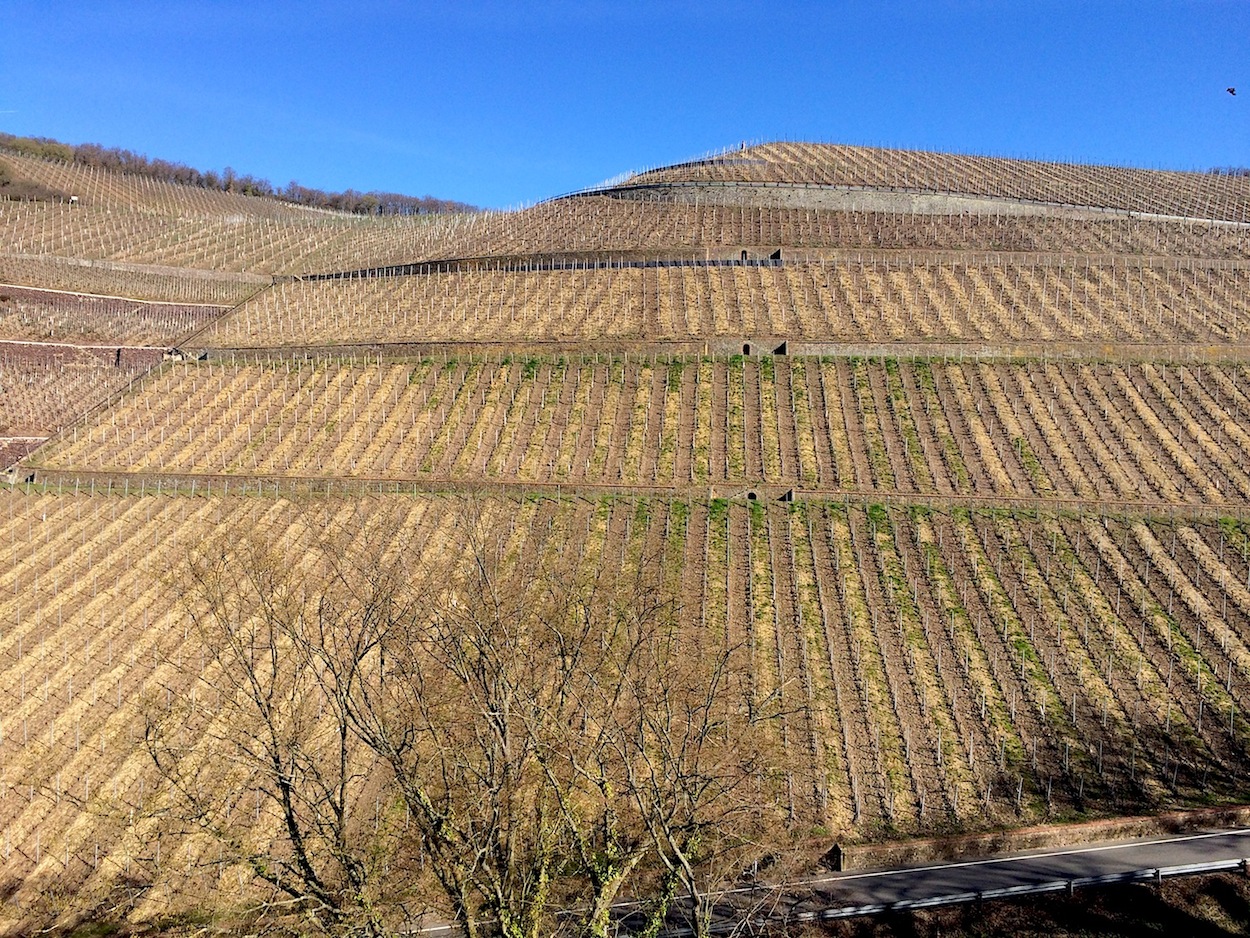
Together with Jasper, I did a lot of work on the new GHB website and luckily that it went online just before the first lockdown in spring 2020, because that helped the wine estate master that difficult situation. Sadly, GHB’s guesthouse and restaurant were both closed for much of 2020 and early 2021. Hopefully you will soon be able to visit GHB once again (it’s just an hour’s drive west of Frankfurt Airport) to enjoy the breathtaking views of the famous vineyard sites from the terrace outside GHB’s Vinothek. I shall miss the view of the legendary Kupfergrube vineyard’s mighty terraces from my office window.
Looking to the future, I undertook an analysis
of climate change in the Middle Nahe Valley. The warming of recent years has
mostly had a positive effect, since it means great dry Rieslings can be
produced here every vintage. That certainly wasn’t the case back in the 1980s
when the estate focused on Rieslings with natural grape sweetness. Even the
2018 growing season – the warmest since ever recorded in Germany! – did not
make any of GHB’s dry Rieslings soft, heavy or dull. That’s a reassuring sign,
because I’m sure Germany will get more growing seasons like 2018 during the
coming years. GHB and the other top producers of the Nahe are very lucky that
the wines retain their cool climate personality even under such conditions.
Drought has become a major issue though,
affecting the vineyards each of the last three growing seasons, and gaining in
severity. In 2020 the irrigation of GHB’s younger vineyards was necessary for
the first time. The estate was far from being alone in Germany in having to
reluctantly take that step. Thankfully the recent rains have refilled the
vineyard soils with water, preparing them for the coming spring.
In both years the last two years GHB’s vineyards escaped massive spring frost damage by a whisker. The period of cold nights in April is a double-edged sword, because it is a danger to the young vine shoots, but also slows down their growth with positive effect. As a result, even in very warm years the Riesling harvest is late enough to benefit from cool autumn nights. They help preserve the acidity and promote the development of delicate aromas in the grapes.
Finally, I want to come back to one of the first
things I did when I arrived at GHB. The hashtag #GHBismyDRC (in German
#GHBistmeinDRC) caused a bit of a stir in the wine scene. Of course, DRC stands
for Domaine de la Romanée Conti, the most famous wine producer of Burgundy. It
was never meant as a bald statement of fact, rather one of intent; my personal
interpretation of GHB’s long-term goal. Today the estate is committed to returning
to the first rank of dry white producers on Planet Wine, just as it was on the
day I arrived. I’m delighted that I was able to help it take a few more steps
along the steep path to the very top. The summit is now in sight.
Many thanks to the Reidel family and everyone at GHB. I raise my glass of 2019 7 Terroirs to you all!
ZEIT FÜR VERÄNDERUNG – ALLES FLIESST (AUCH WEIN)
Anfang März 2019 ging ich von JamesSuckling.com zu Gut Hermannsberg (GHB), der ehemaligen Staatlichen Weinbaudomäne der Nahe, um als ihr Riesling Ambassador im 10. Jubiläumsjahr des Betriebs unter den Eigentümer der Familie Reidel zu arbeiten. Diese Zusammenarbeit ist so gut gelaufen, dass es um ein Jahr verlängert wurde. Dann, letzten Sommer hat James Suckling mich gebeten ihm auf Grund der Virus-bedingten Reiseeinschränkungen wieder zu helfen. Ich habe eine Reihe Berichte für ihn geschrieben, vor allem der sehr umfangreiche Bericht zum Thema des großen Jahrgangs 2019 in Deutschland. Darauf hat er mir vor Weihnachten ein sensationelles Angebot gemacht und am 1. März 2021 kehre ich fest zu ihm zurück.
Nebenher werde ich weiterhin Berichte für diverse deutschsprachige Zeitschriften und meinen englischsprachigen Blog schreiben, wie ich es die letzten zwei Jahre auch gemacht habe. Ich bleibe weiterhin freundschaftlich mit den Eigentümern von GHB, Jens Reidel und seiner Frau Christine Dinse, sowie mit seinem Sohn Jasper – seit Mai 2018 Geschäftsführer von GHB – eng verbunden.
Die letzten zwei Jahre waren eine aufregende Zeit für GHB, nicht am wenigsten wegen der hohen Qualität der Jahrgänge 2018, 2019 und 2020; die besten Weine des Gutes seit den späten 1980er Jahren. Das kann ich mit einer gewissen Sicherheit sagen, weil meine erste Verkostung im Haus am 26. April 1984 stattfand. Mit den neuen Jahrgängen gab es auch einen sanften Schwenk der Weinstilistik Richtung Frucht und Charme, aber die Medien haben eher die intensive Terroir-Prägung der Weine kommentiert, weil das eine ihrer großen Themen ist. Aus meiner Sicht sind aber diese zwei Aspekte der aktuellen Weine gleichermaßen wichtig.
Die letzten zwei Jahre waren extrem kontrastreich. 2019 habe ich sehr viel Zeit und Energie in Verkostungen für Sommeliers, Weinhändler und andere Weinfachleute gesteckt. Wir waren der Meinung die Weine seien manche Orts nicht gut genug verstanden und wir mussten diese Wahrnehmungslücken schließen und die Philosophie von GHB besser kommunizieren. Durch diese Arbeit habe ich sehr viel über Vertrieb und Marketing für hochwertige Weine von dem Vertriebschef und Geschäftsführer GHBs, Achim Kirchner gelernt, ein sehr guter Lehrer. Zusammen haben wir das Bewusstsein für die Originalität der GHB-Weine deutlich gesteigert.
Im August 2019 wurde das 10. Jubiläum der Übernahme des Gutes durch die Reidel Familie gefeiert und ich musste dafür sehr kurzfristig lernen, mit einem lebendigen Adler umzugehen. (Der preußische Adler steht auf dem Etikett seit das Gut 1902 als Königlich Preußische Weinbaudomäne gegründet wurde). Schau mal die Videos von der Feier im Netz an. Direkt danach habe ich ein großformatiges Heft zum Thema die letzten 10 Jahre auf GHB und auf Planet Wein geschrieben und lektoriert. Es fungiert als zusätzliches Kapitel zur Gutschronik (von Christine Dinse recherchiert und geschrieben) welches im März 2012 erschienen ist. Damit wurde dieses Werk aktualisiert.
2020 war natürlich vom Virus dominiert und die Kommunikation von GHB fand fast komplett online statt, wie es auch fast jedem anderen Weinbaubetrieb ging. Ich habe zahlreiche Kurzvideos selber aufgezeichnet. Eine Reihe davon wurden vom GHBs Winemaker Karsten Peter moderiert. Wir haben auch zusammen eine Stafel 20 minütiger Sendungen für Magenta TV #dabei gedreht. Moritz Nagel, damals Einkäufer für die führende deutsche Weinhandlung Hawesko hat auch kräftig mitgewirkt und Julian Huber von Weingut Bernhard Huber in Malterdingen/Baden hat uns bei den Sendungen mit Rosé und Rotwein-Themen großartige Unterstützung geleistet.
Zusammen mit Jasper habe ich viel Arbeit in die neue GHB-Website gesteckt und glücklicherweise ging sie kurz vor dem ersten Lockdown im Frühling 2020 online. Das hat dem Weingut sehr geholfen, um gut durchzukommen. GHBs Gästehaus und Restaurant waren leider für lange Zeit 2020 und Anfang 2021 geschlossen. Hoffentlich werden Sie bald wieder das Weingut besuchen können und die sensationellen Blicke auf die Spitzenlagen von der Terrasse und Vinothek genießen können. Ich werde den Blick auf die mächtigen Terrassen und Mauern der legendären Kupfergrube aus mein Bürofenster vermissen.
Mit Blick auf die Zukunft habe ich die Klimaveränderung im Mittleren Nahetal wissenschaftlich analysiert. Die bisherige Erwärmung war weitgehend positiv, weil es dazu führte, jedes Jahr hochwertige trockene Rieslingweine erzeugt werden konnten. In den 1980er Jahren war das Klima deutlich kühler und das Gut hat deswegen vorwiegend Weine mit natürlicher Restsüße erzeugt. Auch die extreme Witterung 2018 – die wärmste, die je in Deutschland gemessen wurde – hat keinen der trockenen Riesling-Weine von GHB plump, weich oder fad gemacht. Das beruhigt mich sehr, weil ich mir sicher bin, dass es zukünftig häufiger Jahre mit solcher Hitze geben wird. Auch dann werden die Weine von GHB und die der anderen VDP Betriebe an der Nahe ihr Cool Climate Geschmacksprofil behalten.
Dürre ist ein ernsthaftes Problem geworden und wurde die letzten Jahre immer schlimmer. Sommer 2020 hat GHB erstmalig die jungen Reben kräftig bewässern müssen. Damit waren wir keinesfalls alleine in Deutschland! Gott sei Dank haben die Regenfälle der letzten Monate die Weinbergsböden an der Mittleren Nahe wieder gut durchnässt und auf dem kommenden Frühling vorbereitet.
2019 und 2020 haben die Weinberge der Mittleren Nahe ganz knapp die Spätfrostgefahr überstanden. Die kalten Nächte in April sind ein zweischneidiges Schwert, weil sie eine Gefahr für die jungen Rebtriebe sind, aber anderseits ihre Entwicklung bremsen. Das führt dazu, dass auch in sehr warmen Jahren wie 2018 und 2019 die Weinlese an der Mittleren Nahe spät genug statt findet, um von kühlen herbstlichen Nächten zu profitieren. Sie helfen die Säure zu konservieren und die Bildung von feinen Aromastoffen zu unterstützen.
Anschließend möchte ich zu einer meiner ersten Taten auf GHB zurückkehren. Der Hashtag #GHBistmeinDRC (in Englisch #GHBismyDRC) wurde von manchen Mitgliedern der Weinszene falsch verstanden. DRC steht für Domaine de la Romanée Conti, der berühmteste Weinerzeuger Burgunds. Mit diesen Worten wollte ich nicht angeben, sondern das große Ziel von GHB persönlich interpretieren. Die Besitzer und das Team des Weinguts wollen es zurück zur Weltspitze führen und dieser Gipfel ist in Sichtweite. Es freut mich, dass ich helfen konnte, es ein paar Schritte weiter auf diesem steilen Weg zu bringen. Das große Ziel von GHB bleibt es, einer der führenden Erzeuger von trocknen Weißweinen auf Planet Wein zu werden.
Ich hebe mein Glas 2019 7 Terroirs und bedanke mich bei der Familie Reidel und dem ganzen GHB-Team für die Unterstützung!
Posted inHome|Comments Off on TIME FOR CHANGE – Everything Flows (Including Wine)
Welcome to the deep end of 2020, the shortest and darkest day of the year in the Northern Hemisphere and the original mid-winter festival. However, for the United Kingdom this is the Darkest Hour in my lifetime, and I am 60 years old. Not only has the last deadline for the negotiation of the post-Brexit trade treaty between the UK and the EU passed without positive result, but since midnight Germany, along with many European countries, has quarantined the UK due to the new strain of the coronavirus there.
England now find’s itself in a state of very Unsplendid Isolation. Although the shock of the referendum of 23rd June 2016 going in favour of the Leave campaign by a small margin was serious, I never imagined that the downhill slope this set the UK on would lead us to this terrible endpoint. During the last General Election campaign at the end of last year Prime Minister (Alexander) Boris (de Pfeffel) Johnson promised an “oven-ready” trade treaty with the EU. However, now the English Channel is deeper than it has been since the Fall of France in June 1940.
Of course, this is all very alarming, but some much less obvious developments in the UK make me feel equally worried. I am thinking particularly of the so-called Common Sense Group (CSG) of Conservative Party MPs and Peers. The formation last summer of this group with more than 50 members was inspired by the work of the co-called European Research Group (ERG) that successfully pushed the country in the direction of hard Brexit. The Cambridge Dictionary defines Common Sense as “the basic level of practical knowledge and judgment that we all need to help us live in a reasonable and safe way”, and that’s what it meant when I grew up in suburban London during the 1960s and 1970s. However, what the CSG members mean by this term is very different and far more dangerous.
Their goal is, among other things, to promote a simplified version of British history emphasizing the role of their choice of national heroes to intensify patriotism. Recently, to this end, they have targeted professional historians like Professor Corinne Fowler of the University of Leicester, accusing them of “rewriting” history and being “Marxist”. She is the author of an interim report for the National Trust entitled Colonialism and Properties now in the Care of the National Trust, Including Links with Historic Slavery. It makes clear the links between figures like Rudyard Kipling and Winston Churchill and British colonialism. None of that is disputed by anyone else familiar with the facts. Many of Rudyard Kipling’s literary works had more or less obvious colonial themes. Winston Churchill was Secretary of State for the Colonies in 1921-22 and decades after that remained committed to preserving the British Empire, as the texts of many of his speeches show.
The National Trust preserves and manages a large number of the stately homes of the UK, and the fortunes of many of the families who built those stately homes were earned in part either directly or indirectly through slavery. During the 18th century investing in slavery was normal among the upper classes and extended into the middle classes. For example, the extremely profitable sugar plantations in British and other colonies in the Caribbean were totally dependent upon slave labour. These are likewise well-known facts.
Fowler has repeatedly pointed out that her work is, “evidence-based scholarship”. She, like me, is a member of the reality-based community that rejects the manipulation of and/or suppression of facts. The members of the CSG want to stick with the forthrightly patriotic version of British history they learned at school during the post-WWII period, that I was also taught. When they call this “common sense” what they mean is that it should not ever be questioned. This form of nationalism seeks to avoid and reject everything uncomfortable in Britain’s past in order to idealize and glorify a small group of almost exclusively male national heroes. Their assigned role is to be the focus for a form of patriotism implicitly antagonistic to other cultures. For the CSG the waves that Britannia used to rule were also what separated us from the foreigners and all things foreign.
In short, the CSG see Britain as being in opposition to “the continent”, i.e. Continental Europe, along with the other continents, excluding only communities descended from British colonists. Their worldview is unashamedly neo-imperialist and, at least implicitly, white supremacist and sexist. They believe that Splendid Isolation from other nations, peoples and cultures is a crucial prerequisite for the UK’s future greatness. These are treated as being infections from which the island of Great Britain must be isolated in order to become great once again.
Of course, that is perverse when you consider how the UK is now quarantined due to an infectious disease there. Now the British nationalists (who are often actually English nationalists) have the isolation they seek, though in a decidedly unsplendid form. My fear is that not only will the economic crisis resulting from the double whammy of Brexit and Covid-19 cause great suffering in my home country, but that it will also result in the CSG’s “common sense” vision of history growing in influence. There’s a real danger that it might become dominant in a nationalistic official culture openly hostile to a wide range of other nations, peoples and cultures. That path leads in the direction of war.
Posted inHome|Comments Off on England’s Unsplendid Isolation and the Dangers of “Common Sense” History
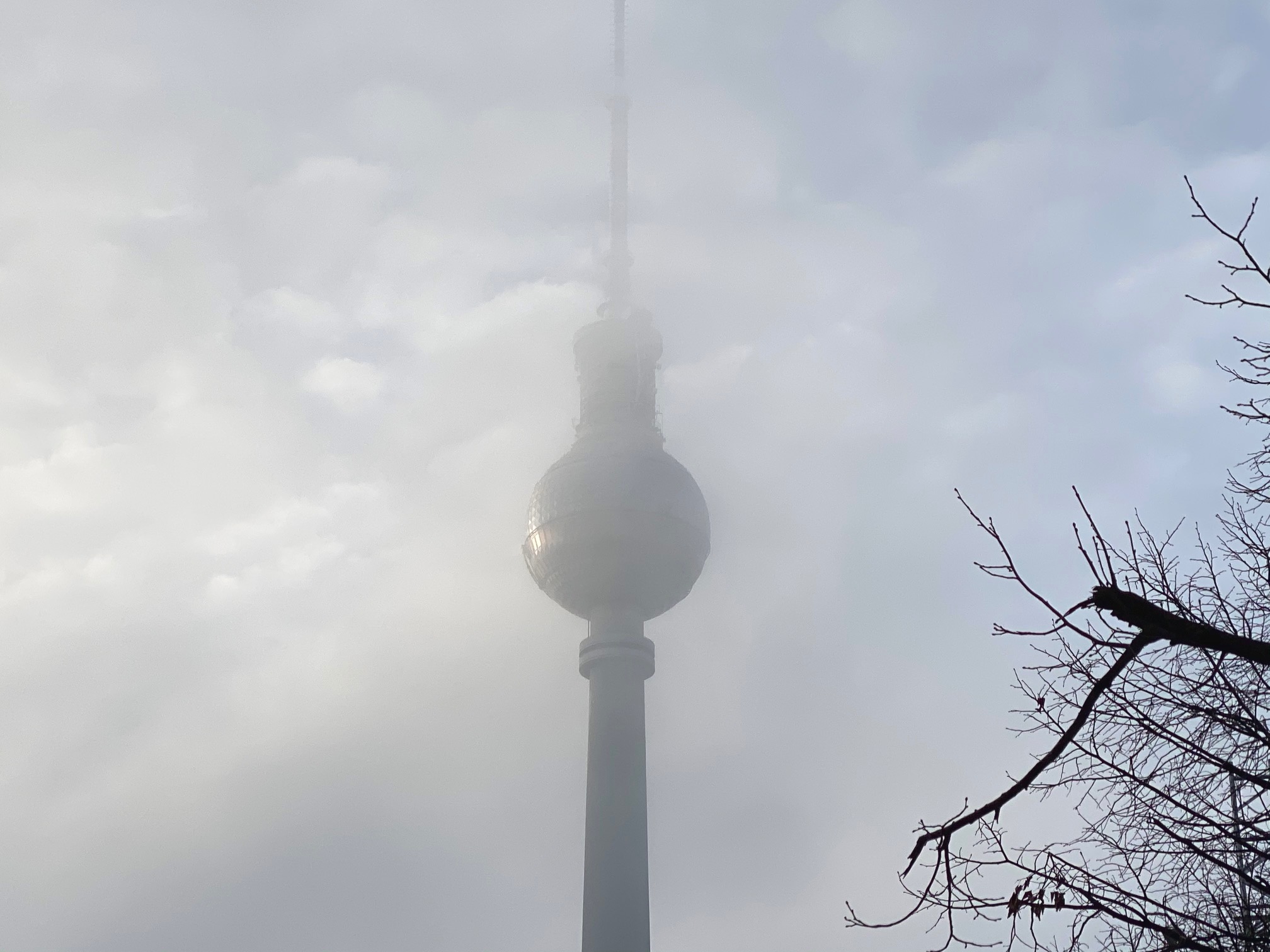
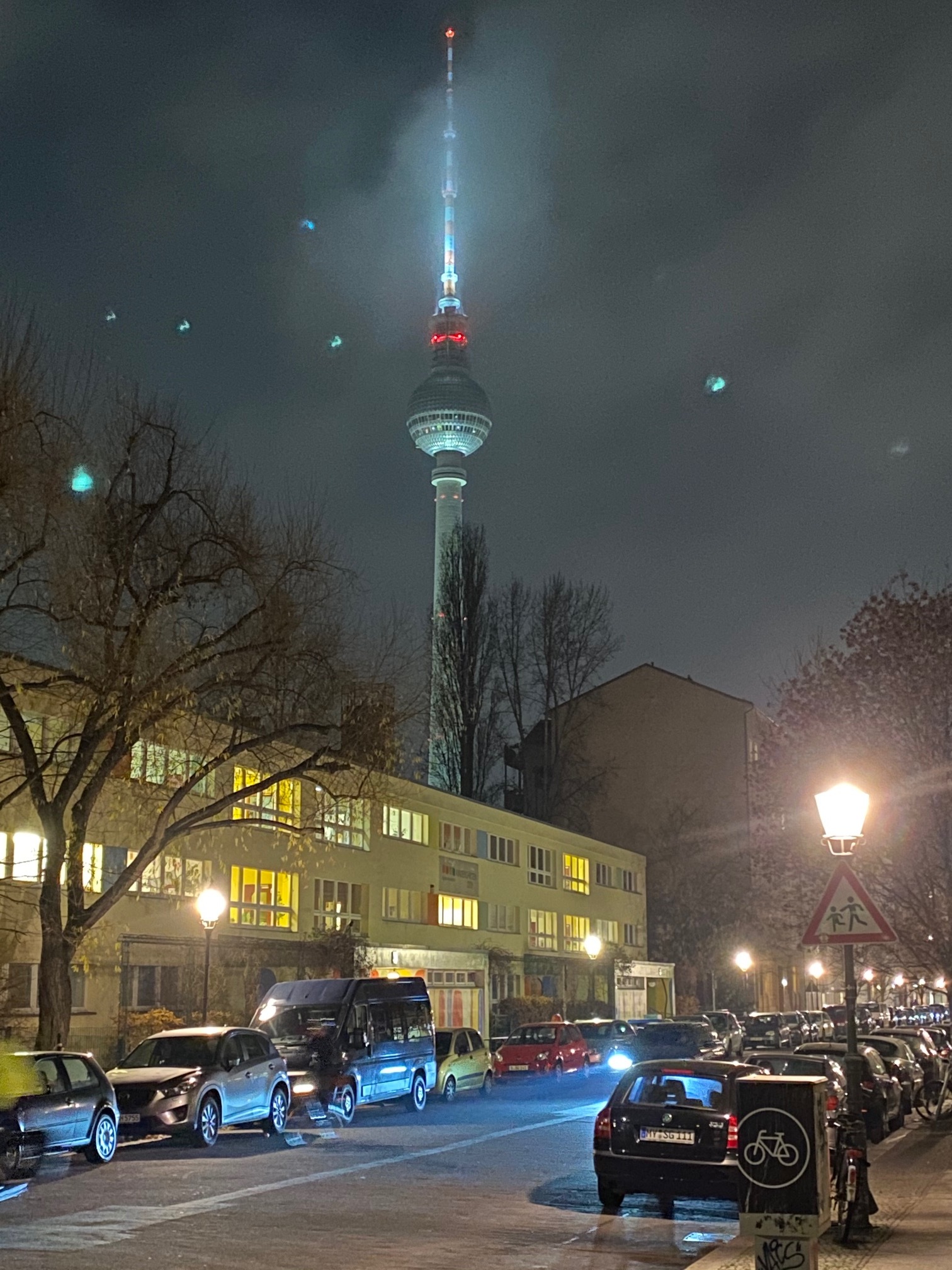
I don’t expect anyone will find it hard to believe that Berlin, where I lived from the end of 1993 until the end of 2012, currently feels very spooky. In virtually empty side streets and parks where the risk of catching Covid-19 is close to zero people are wearing masks to advertise their anxiety. The wall-to-wall fog and the sun low in the sky behind it give the scene a wan grayness. It’s the perfect backdrop to the creeping paranoia, as if the virus had a talent as movie director. Out on the street yesterday evening getting something tasty to eat at the Vietnamese eatery Monsieur Vuong, the bright Christmas lights were a feeble answer to the pervasive feeling of being under siege by an invisible army.
I’m certainly not the only person who’s found
wine helpful since the beginning of the pandemic, and wine consumption in
Germany is up by at least a quarter. Like many other long-term wine drinkers,
during the first lockdown I opened a lot of great bottles that had been waiting
in the cellar for a special occasion that somehow never came. And I really
savored them, in fact they provided some of the most intense wine experiences I
ever had and they colored many wonderful evenings.
During the summer, between the first and second
lockdown, I was suddenly busy tasting wine for JamesSuckling.com for the first
time in a year and a half. That was exciting because many of the German and
Austrian white wines of the 2019 vintage are really special. Most of the wines
from Alsace I tasted were of earlier vintages, but there were still plenty of
fascinating wines and some inspiring ones. Since I first got involved with it
professionally during the spring of 1981 in London wine has been able to
inspire me. That winetasting is my job for me doesn’t in any way impinge on the
intensity of those experiences, but the situation in this second lockdown has.
I think the root of this lies in the fact we all
know it’s the last Covid-19 lockdown, because the vaccine is now arriving, but
on the other hand it will be some time before enough people have been
vaccinated that the situation changes fundamentally. Each of us now has a fantasy
future we tell ourselves will be bright and shiny and so much more. It even has
a name: 2021, a much better year than 2020. Of course, it will be March, April,
maybe May before things get a lot better, but we’re still sticking with the idea
2020 = BAD / 2021 = GOOD. What we’re also doing, but seldom admitting to, is
deferring to our mental 2021 projections, because we want to believe they are
the sure signs of that better future is waiting for us.
On the other hand, some naïve people imagine
there will then be a return to normality, that is the way things were before
Covid-19. Others realize that during the last months plenty of things changed
permanently and other major changes will follow, so there’s no possibility of
going backwards. In spite of that they too, I too, sometimes feel nostalgic
about the pre-Covid-19 period.
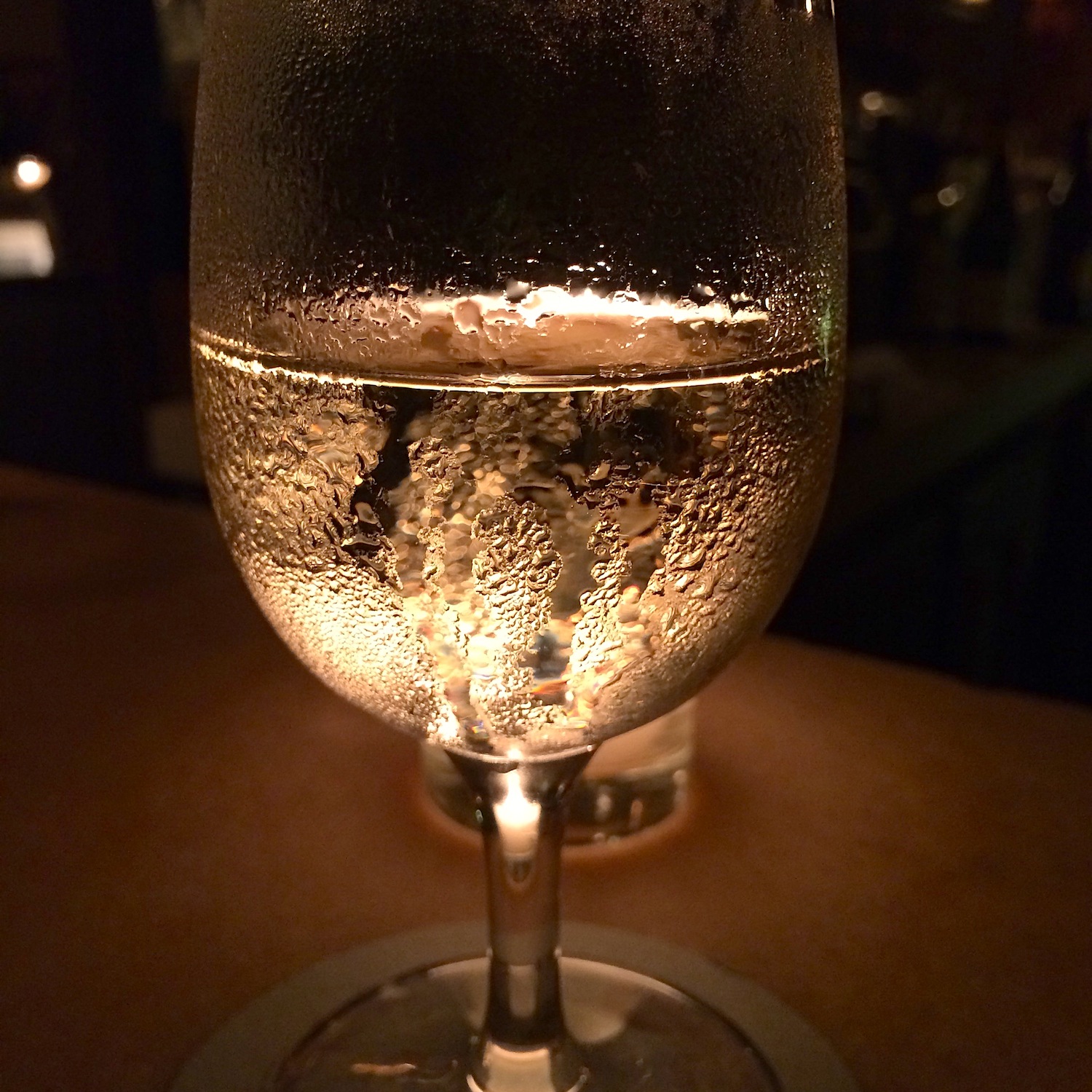
The problem with leaning nostalgically backwards to our rosy memories or expectantly forwards to our personal fantasy future is that it makes us absent-minded, that is partially absent from the present. We are all away from everything that’s here and now to some degree (because the present is awkward, frustrating, painful or terrible) and that diminishes the pleasure of wine, since the aromas and flavors can only delight, fascinate, seduce or inspire us if we are fully present for them. And for me that’s what wine is all about. So, it’s time to open another good bottle, pour a glass and to sink into the liquid here and now.
being here for the first time in a couple of years has made me do a lot of thinking. So far Vienna has weathered the Covid-19 storm better than most big Western cities I’ve either seen or read extensive reports from, however, even before the virus arrived a lot of stores and some bars I used to frequent either closed or changed dramatically. So, I’m very glad that shortly after my last visit you were able to come here and got to experience the city when it was still on top form, complete with its own special arrogance.
I’m even more glad that it was possible to show you my Berlin and my London before they experienced much more major upheavals than Vienna. Although I never set out to show you my New York in the same way, and you know that city well enough yourself, I was also able to do the same thing with NYC to some extent. I’m so glad all this was possible and that you found interesting not only because of these cities intrinsic interest, but also because they shaped the way I think and how I see the world. I don’t want to beam myself back to the “good old days”, but in all of these cities some things that are important to me have been lost and others will go by the time the Covid-19 pandemic is over.
However, that’s not why I’m writing today. It’s to fill you in on what I do when I return to “my” cities, either alone or in company. At first here’s always an element of nostalgia, plus some curiosity to see if and how familiar places have changed, but this is only “foreplay”. As I wander around though I’m also looking for stuff that I lost or forgot. It’s rather like going to a favorite bookshop in the hope that serendipity will lead you to a great book you didn’t realize existed when you walked in the door, except that when the book’s “in my hand” I recognize it as a long lost friend. The interesting thing about this is that it only happens if I manage to become completely absorbed by the city and my mind is totally emptied of all the everyday trivialities. That feeling of recognition is delicious, because of the conviction that this thing has rediscovered me and that it is a thread that if I follow it will lead me somewhere surprising I could have gone a long time ago, but for some reason didn’t.
Vienna is a very old city, not only in the
strict historical sense, but also in terms of the widespread awareness of its
past amongst the citizens and without that I don’t think that I would have
discovered Hauenstein back at the end of the 1990s when I spent a lot of time
in Vienna, or that I would remembered him today, more than twenty years later.
He has an extremely rare combination of mutations that mean he ages very slowly
and is now much older than anyone else you or I know. Alternatively, he may be
suffering from a delusion coupled with extraordinary historical knowledge and a
great acting ability that enable him to persuade highly intelligent people he
really was there when major historic events occurred.
When I get home I’ll dig out his story and read it through again. I would send it to you, but it’s in German It’s one of many writing projects that got left at the wayside because other work that brought in money became pressing for various reasons (sometimes I desperately needed the money!) Loose ends, frayed edges and a lingering feeling that time is now getting short. At the same time the pressing knowledge distances that for most of my life were no more than short hops are now like the great voids between the planets and will probably remainso for a long time to come.
Thanks again for the chance to give you an
introduction to “my cities” as I experienced them and how they make me see the
world. That was a very special pleasure!
There’s a very apt American expression for the current position in the USA: IN DENIAL. This means not just denying one or two true facts on certain occasions, but living in a state of denial about a situation of some significance for your own life and those of others. The Germans have a great word for this that says exactly what it is: Lebenslüge or life-lie, i.e. a life based upon a lie that infects every part that life. However, we’re now learning about a form of being in denial that goes even further than that, in fact, one that takes it as far as you possibly can. I’m not talking about those mild cases who are simply continuing as before as if nothing had changed. It’s plain that some of them know all they’re doing is keeping up appearances; an activity that helps maintain the popular delusion they recognize for what it is. Their collusion in this process is the thing they’re really in denial about. However, for the hardcore cases it’s a completely different ball game, because their gripe is not with certain real world events, but with the real world, period. Their goal is a wholesale substitution of “alternative facts” for reality. I’m not comparing them morally with the most extreme 20th century authoritarian regimes – left or right – that attempted this trick, but I am pointing out that some of the same psychological mechanisms are involved (see Losing Reality by Robert Jay Lifton for more on this). It’s hard to imagine how they could succeed in their project for any length of time or to any great extent, but so many people are involved in this thing and it’s hard to imagine them all accepting – at some point – that the game is finally up. Surely, in-denial-groups will continue to reject the real world out of hand and clinging together if only not to feel alone in the face of reality. In a virtual space of their own they could realize their goal in a kind of parallel universe and a lost world far removed enough from reality to be inviolable. I’m not sure that I like that idea, but it would be preferable to the present situation.
For another take on this battle between the people of the United States of Fantasy and the American Reality Based Community see this brilliant story by Bruno Macaes in the New York Times of 12th November 2020: